


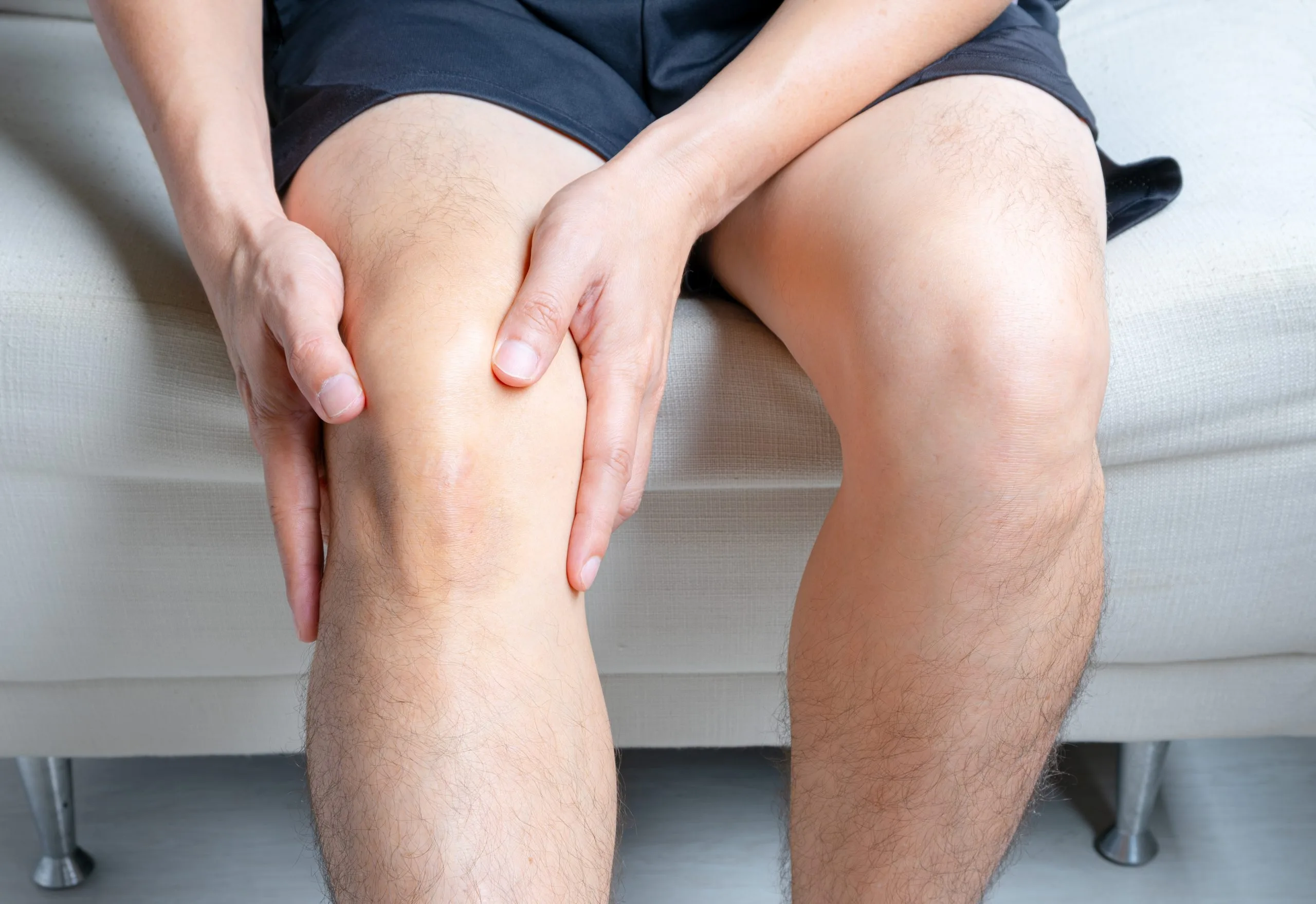
There are many non-surgical alternatives to knee replacement that can significantly reduce pain, restore mobility, and improve your quality of life. At Advanced Physical Medicine in St. Clair Shores, MI, our non-surgical philosophy focuses on treating the root cause of your knee pain. By combining physical therapy, targeted exercise, weight management, bracing, joint supplements, knee gel injections, MLS laser therapy, and regenerative medicine, many patients can delay or even avoid the need for major surgery altogether.
Below, we break down each option so you can understand your choices before making any major decision about your knees.
The most frequent cause of chronic knee pain, especially in older adults, is osteoarthritis – a “wear-and-tear” condition where protective cartilage gradually deteriorates, allowing bones to rub together and causing inflammation, pain, and bone spurs.
Other causes of knee pain include:
Post-traumatic arthritis: Arthritis that develops after an injury, such as a ligament tear or fracture.
Rheumatoid arthritis: An autoimmune disease where the body’s immune system attacks the joint lining.
Meniscus tears: Damage to the C-shaped cartilage that acts as a shock absorber in the knee.
Tendonitis: Inflammation of the tendons surrounding the knee joint.
Knee replacement surgery may be considered when knee pain and stiffness become severe enough to limit everyday activities, such as walking, climbing stairs, or getting in and out of a chair.
Absolutely not. While knee replacement can succeed for the right candidate, it is a major, permanent surgery with a long recovery. Even for patients with advanced arthritis, a combination of innovative treatments can make a world of difference.
Non-surgical treatments work by reducing inflammation, improving joint mechanics, strengthening the muscles around the knee, and easing pressure on the damaged area. When these elements are addressed together, many people feel far less pain and move more freely.
Some people delay surgery by several years – and some avoid it entirely – by staying active, keeping their weight in check, and using treatments like physical therapy and joint injections. The key is consistency and starting sooner rather than later.
While we can’t regrow lost cartilage, we can reduce inflammation, improve joint lubrication, and strengthen the muscles around the knee to take pressure off the joint. Many patients are surprised at how much better they feel without surgery.
Some of the most powerful changes happen outside a treatment room. Simple daily habits can dramatically affect how your knees feel.
For every one pound of body weight you lose, you reduce the pressure on your knees by roughly four pounds with each step. Losing even a small amount of excess weight can noticeably reduce knee pain and slow joint wear – which is why it’s often one of the first recommendations for anyone with knee arthritis.
Movement is medicine for arthritic knees. Inactivity can make the problem worse by weakening muscles and stiffening joints. The goal is to stay active without pounding the joint.
Strengthening Exercises: Strong muscles – especially the quadriceps, hamstrings, and hip muscles – act as shock absorbers for the knee. Targeted strengthening stabilizes the joint and reduces load on damaged cartilage, cutting down on pain during everyday tasks like climbing stairs or standing up from a chair.
Low-Impact Aerobic Conditioning: Swimming, water aerobics, cycling, and walking are gentle on the knees while improving circulation and overall fitness. These exercises boost blood flow to the joint, which can help reduce inflammation, and support weight control without jarring stress.
Physical therapy is a cornerstone of non-surgical knee care. A skilled therapist conducts a thorough evaluation to identify the weakness, tightness, and poor movement patterns contributing to your pain.
Hands-on techniques mobilize the knee joint, ease muscle tension, and reduce stiffness in the surrounding soft tissues. Combined with a personalized exercise plan, manual therapy can immediately improve range of motion and decrease pain.
For many patients, a dedicated physical therapy program – especially combined with other non-surgical treatments – can be effective enough to eliminate the need for surgery. For others, therapy strengthens the knee and body before a procedure, improving recovery. Either way, it is a valuable step worth taking early.
A knee brace is an external device worn to support the knee joint, reduce pain, and improve stability. For people with knee arthritis, a brace can make a significant difference in their ability to walk and stay active comfortably.
There are several types of braces, but one of the most effective for arthritis is an “unloader” brace. This type of brace is designed to shift pressure from the damaged, arthritic part of the knee to a healthier area. By “unloading” the painful side of the joint, it can dramatically reduce pain during weight-bearing activities like walking. Other braces provide compression and support, which can help reduce swelling and improve your sense of joint position (proprioception), making you feel more stable and confident on your feet.
MLS laser therapy is an advanced, FDA-cleared technology that reduces pain, inflammation, and swelling without injections or medication. It uses specific wavelengths of light to penetrate deep into the tissue, stimulating cellular repair and accelerating healing.
For knee arthritis, the laser energy increases blood flow to the area, reduces inflammation in the joint lining, and provides significant pain relief. Sessions are painless, last only 10-15 minutes, and have minimal side effects. Many patients experience relief after just a few treatments, making it an excellent complement to physical therapy and other modalities.
Regenerative medicine represents a groundbreaking shift in treating joint pain. Instead of just masking symptoms, these treatments aim to stimulate and accelerate your body’s own natural healing processes to repair damaged tissue, reduce inflammation, and provide long-lasting relief.
Prolotherapy, short for “proliferative therapy,” involves injecting a natural solution (often a dextrose-based solution) into the weak or damaged ligaments and tendons around the knee. This injection creates a mild, localized inflammation that triggers the body’s healing cascade, encouraging the growth of new, stronger tissue. Over a series of treatments, this process can tighten and stabilize the knee joint, significantly reducing pain and improving function.
Platelet-rich plasma (PRP) therapy uses the healing power of your own blood. A small sample of your blood is drawn and spun in a centrifuge to concentrate the platelets, which are rich in growth factors. This platelet-rich plasma is then injected directly into the knee joint. These growth factors signal the body to repair damaged cartilage, reduce inflammation, and recruit stem cells to the area, promoting tissue regeneration and providing substantial pain relief.
When pain is more severe, injecting medication directly into the knee joint can provide powerful, targeted relief. The two most common types are corticosteroids and hyaluronic acid.
Corticosteroids are potent anti-inflammatory agents. An injection can rapidly decrease inflammation and pain during a severe flare-up. While effective, the relief is often temporary, and injections are typically limited to a few times per year to avoid potential damage to cartilage.
Also known as viscosupplementation, these injections deliver a gel-like substance called hyaluronic acid (HA) into the knee. HA is a natural component of healthy joint fluid, providing lubrication and shock absorption. In an arthritic knee, HA breaks down. Replenishing it can cushion the joint, reduce bone-on-bone friction, and provide pain relief that can last for several months.
While our focus is on treating the root cause, certain medications and supplements can play a supporting role in managing symptoms.
Over-the-counter nonsteroidal anti-inflammatory drugs (NSAIDs) like ibuprofen or naproxen can help manage pain and reduce inflammation. However, they should be used under a doctor’s guidance, as long-term use can have side effects.
Supplements like glucosamine and chondroitin are popular for joint health. While scientific evidence is mixed, some patients find they help manage symptoms. It’s always best to discuss any supplements with your healthcare provider to ensure they are safe and appropriate for you.
With so many choices, the right plan depends on your specific knee condition, your activity level, and your goals – which starts with a thorough, accurate diagnosis.
Most orthopedic experts recommend a comprehensive trial of conservative care before considering knee replacement – including weight management, physical therapy, bracing, anti-inflammatory medications, and injection therapies like corticosteroids or hyaluronic acid. A pain management evaluation helps map out which combination is most likely to work for you.
There is no single “best” treatment. The most effective approach is a personalized, multidisciplinary one. Our process begins with a thorough one-hour evaluation. Our team takes the time to understand your condition, lifestyle, and goals – then creates a customized plan that may combine several modalities, such as knee gel injections, physical therapy, and MLS laser therapy, to treat the root cause of your pain.
If chronic knee pain is affecting your daily life, knee replacement surgery is not your only option. A personalized combination of non-surgical treatments – including physical therapy, targeted exercise, weight management, bracing, injection therapies, MLS laser therapy, and regenerative medicine – can help reduce pain, improve mobility, and support long-term joint health.
At Advanced Physical Medicine in St. Clair Shores, MI, we focus on identifying and treating the underlying causes of knee pain so you can stay active and maintain your quality of life. Before committing to major surgery, schedule a comprehensive evaluation to explore the non-surgical solutions that may help you delay – or even avoid – knee replacement.
Schedule Your Evaluation – Call (586) 563-3300

Real Relief for Real Conditions